
Bridging Concept and Reality: Why Design Must Connect to Physical Execution
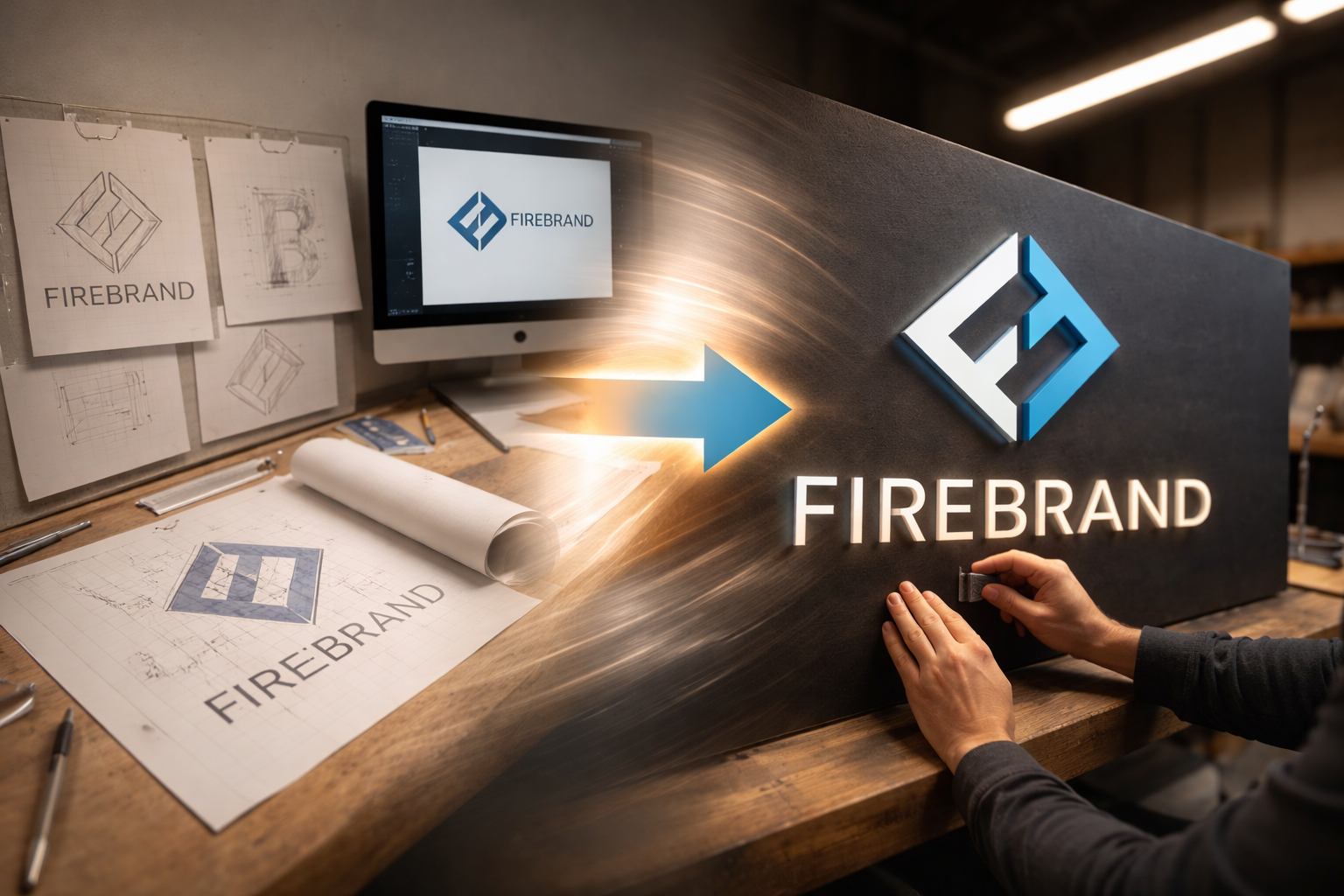
Strong branded environments often begin with powerful ideas.
Design teams create compelling visual concepts — bold graphics, refined materials, immersive spaces — all intended to express a brand in a meaningful and memorable way. On paper and on screen, these ideas can be clear, cohesive, and highly effective.
But bringing those concepts into the built environment is where complexity begins.
The Gap Between Design and Execution
Conceptual design and physical implementation operate in two very different worlds.
Design exists in controlled conditions — clean renderings, consistent lighting, ideal surfaces, and assumed materials. Physical environments introduce variables: structural limitations, inconsistent substrates, electrical constraints, local regulations, and real-world wear over time.
Without a clear connection between concept and execution, even the strongest design can lose integrity during implementation.
Colors shift. Materials behave differently. Illumination becomes uneven. Details are simplified or altered to meet construction realities.
What begins as a cohesive brand experience can quickly become fragmented.
Translating Design into Physical Systems
Successful branded environments require more than design intent — they require translation.
This means converting visual concepts into technical specifications that define exactly how each element will be built, installed, and maintained. Materials must be selected not just for appearance, but for durability, availability, and performance across different climates and environments.
Print methods must be chosen based on scale, surface conditions, and longevity. Illumination systems must be engineered to deliver consistent output across varying electrical conditions. Fabrication techniques must support both design detail and production efficiency.
Every decision connects back to one goal: preserving the integrity of the design as it moves into reality.
The Role of Prototyping and Material Validation
One of the most effective ways to protect design intent is through prototyping.
Mockups allow teams to evaluate materials, finishes, lighting, and fabrication methods before full production begins. They reveal how colors interact with real surfaces, how illumination performs in context, and how details translate at scale.
This process reduces risk, improves decision-making, and ensures alignment between design teams, stakeholders, and implementation partners.
Designing for Real-World Conditions
Branded environments must perform beyond initial installation.
Materials are exposed to sunlight, humidity, cleaning processes, and daily use. Graphics must maintain clarity over time. Signage must remain structurally sound and visually consistent across locations.
Design decisions made early in the process directly impact long-term performance.
When conceptual design is informed by real-world conditions, the result is not just visually compelling — it is durable, scalable, and repeatable across an entire portfolio.
Creating Alignment Across Teams
Bridging concept and execution also requires alignment between stakeholders.
Brand teams, design agencies, facilities groups, and implementation partners must operate from a shared understanding of how the brand will be realized physically.
Clear technical standards, material specifications, and documentation create that alignment — allowing projects to move forward with confidence and consistency.
From Idea to Environment
A successful branded environment is not defined by design alone, or by execution alone.
It is defined by the connection between the two.
When conceptual thinking is supported by technical expertise, material knowledge, and disciplined implementation, brands are not just expressed — they are experienced as intended.